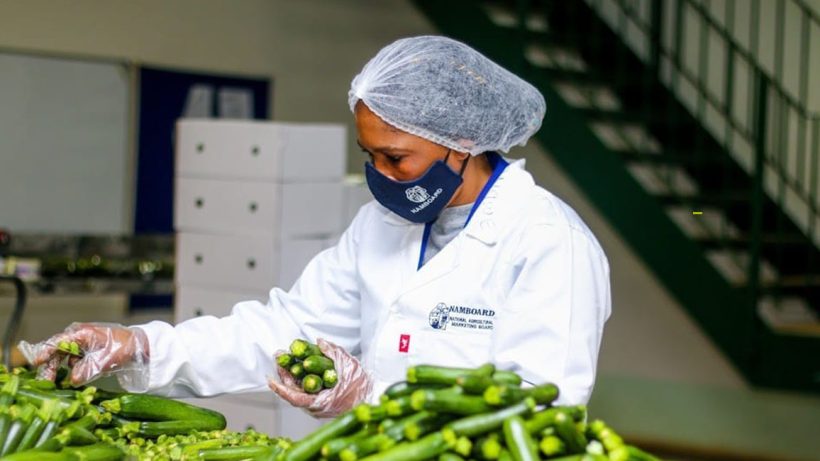
MATSAPHA – Minister of Agriculture Mandla Tshawuka has intervened in a case involving a distraught farmer who threatened to take her own life after the National Agricultural Marketing Board (NAMBoard) rejected her green pepper crop, citing quality issues.
The minister said he was shocked to learn that NAMBoard’s produce rejection policy was still being implemented, noting that it had been scrapped when he assumed office. Tshawuka criticised the policy as unfair and vowed to engage the Board for an explanation.
“At the very least, they should negotiate the price per crate instead of rejecting the produce entirely,” he said, adding that the farmer should be compensated for the loss.
Tshawuka also revealed that he intended to personally meet the farmer, who was reported to have been suicidal following the rejection.
When contacted on Thursday, the farmer confirmed that NAMBoard had reached out to her the previous afternoon.
“We had very good engagements that will assist everyone in the future and we smoked the peace pipe,” she said briefly.
The farmer, who asked not to be named, said she lost over E100 000 after NAMBoard refused to accept her produce earlier this week.
A former banking employee, she resigned last year and invested her pension payout into a two-hectare farm in the Lubombo Region, where she began commercial production of green peppers. She said she had entered into an agreement with NAMBoard that guaranteed her market access.
“This was a huge relief because it meant I could focus on farming without worrying about where to sell,” she said.
She explained that the rejection of her produce was devastating, given that she had used her retirement savings to fund the venture. The farmer, who also owns guesthouses in Ngwane Park, Manzini, said her hospitality businesses were already struggling due to the sluggish economy.
NAMBoard, a parastatal under the Ministry of Agriculture, provides a guaranteed market for local farmers’ produce and supports them through input supply, training, and extension services.
However, a NAMBoard employee who spoke on condition of anonymity defended the rejection, saying the decision was based purely on quality control.
“More than 50 per cent of her produce did not meet our standards. Our Quality Department has qualified professionals whose judgment determines acceptance or rejection. If less than 50 per cent is substandard, we can select the best, but in this case, more than half were below standard,” the employee said.
The official added that the produce had also been harvested prematurely, making it unsuitable for sale.