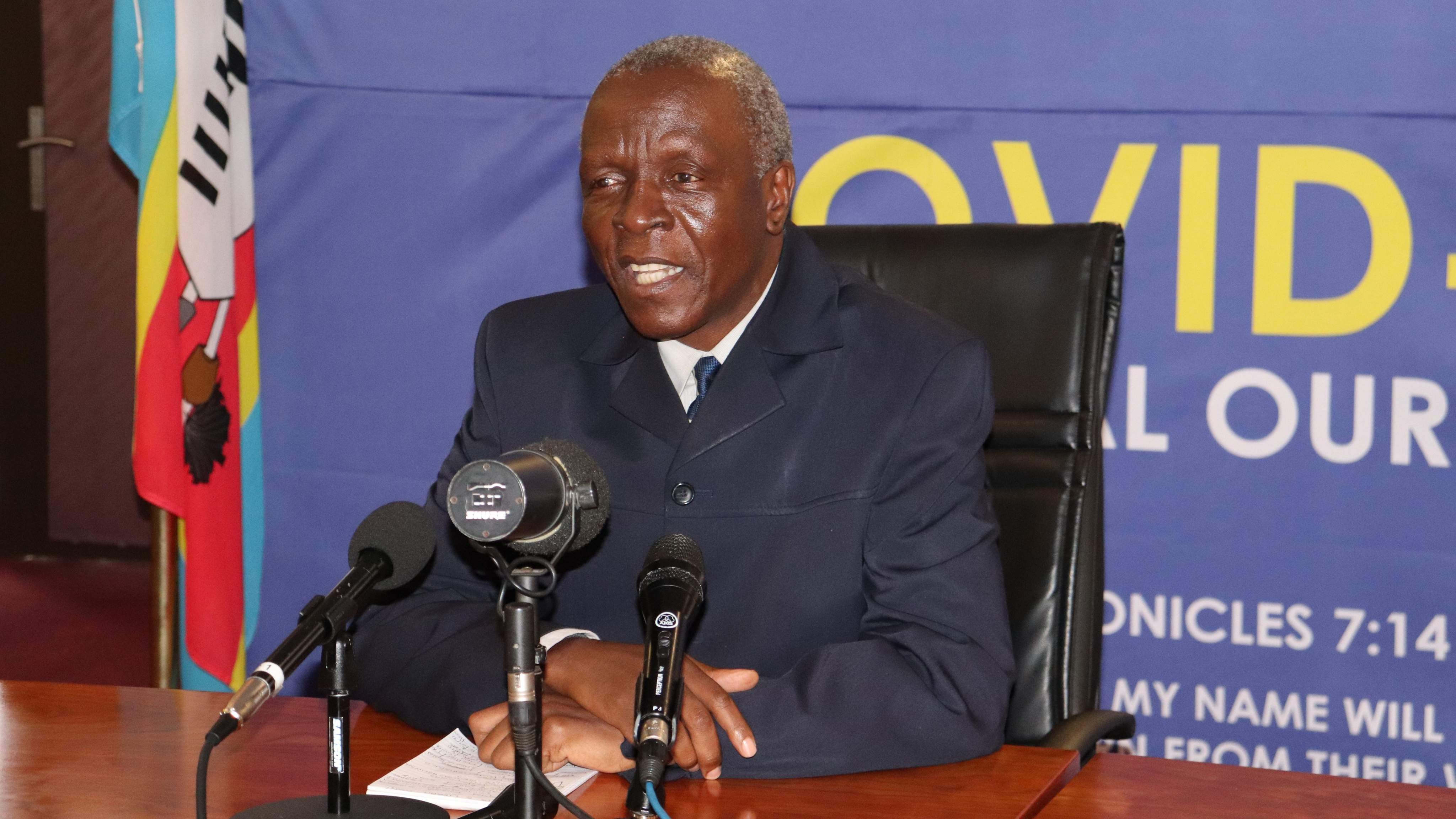
MBABANE – The Minister for Justice and Constitutional Affairs, Prince Simelane, has admitted that Acting Anti-Corruption Commission (ACC) Commissioner Maphevu Mkhatshwa does not meet the qualifications required to be appointed as a substantive commissioner.
However, the minister insists that Mkhatshwa’s lack of qualification to serve as a High Court judge does not disqualify him from holding the acting position.
The admission is contained in the minister’s responding affidavit filed in court following an application lodged in August by ACC Assistant Investigator Bonginkhosi Dlamini.
Dlamini is challenging the extension of Mkhatshwa’s contract, arguing that the law requires anyone leading the ACC to have served as a High Court judge. He seeks a court declaration that Mkhatshwa’s continued occupation of the office is inconsistent with Section 5(1) of the Prevention of Corruption Act No. 3 of 2006.
The allegations remain untested, as the case has yet to be heard.
In his affidavit, Prince Simelane stated that his response was confined to the aspects relating to Mkhatshwa’s appointment as Acting Commissioner. He confirmed that the initial acting tenure, which began in December 2023, expired on June 19, 2024, but that he lawfully extended it thereafter.
“I admit that I extended the first respondent’s tenure as acting commissioner. I deny that the extension of tenure was unlawful,” the minister said.
He further explained that the Prevention of Corruption Act, 2006, authorises him to nominate the Deputy Commissioner to act as commissioner when the substantive position is vacant.
“Mkhatshwa is a substantive Deputy Commissioner, and since the position of Commissioner remains vacant, I was entitled by the Act to nominate him to act,” Simelane submitted.
The minister added that the Act does not specify a time limit for the duration of an acting appointment and that the appointment remains valid until a substantive commissioner is appointed.
He dismissed Dlamini’s reliance on Establishment Circular No. 4, arguing that such circulars do not override statutory provisions.
“Establishment circulars are not legislation. They cannot curtail the express provisions of the Act. The empowering legislation imposes no time limit on an acting commissioner,” he said.
The minister reiterated that while Mkhatshwa does not meet the criteria to be appointed substantively, his current acting role is legally valid.
“He does not have to be qualified for appointment as a judge of the High Court for him to act as commissioner. His substantive position as Deputy Commissioner qualifies him to act,” the affidavit reads.
Simelane concluded that all actions taken by Mkhatshwa since the renewal of his acting appointment are lawful and valid.
Acting Commissioner Defends Suspension of Investigator
In a separate responding affidavit, Acting ACC Commissioner Maphevu Mkhatshwa confirmed that he suspended Dlamini, citing Section 58 of the Public Service Act of 2018.
He denied allegations that he usurped the powers of the Civil Service Commission (CSC), insisting that the ACC operates independently of the CSC.
“It is settled law in our jurisdiction that the Civil Service Commission does not appoint officers of the Commission. The Commission is independent of the CSC,” said Mkhatshwa.
He further stated that Dlamini’s suspension was lawful and followed proper procedures, as the officer had been charged with criminal offences allegedly committed in violation of the Prevention of Corruption Act, 2006.
“The applicant was suspended because he was facing criminal charges. The suspension was lawful,” Mkhatshwa said.