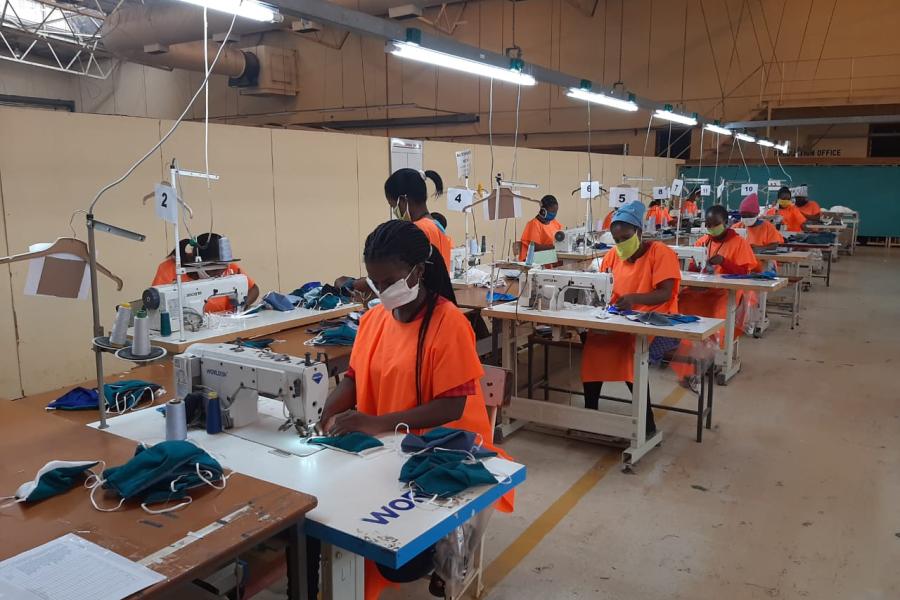
MATSAPHA – A 32-year-old textile worker, Bekiwe Vilakati of Sithobelweni, was found dead in her rented one-room flat at Mathangeni, Kwaluseni Inkhundla, on the morning of Tuesday after reportedly being strangled and stabbed — a knife was allegedly left lodged in her neck.
Neighbours and colleagues say Vilakati, who worked at a Matsapha factory, had complained to family and co-workers about an abusive relationship with her boyfriend, Ayanda Dlamini (31) of Bethany, who had been living with her for about three months. Sources allege Dlamini frequently assaulted her during arguments and had threatened to kill her if she reported him to police.
A teacher at her workplace and a neighbour became concerned when Vilakati failed to report for work and could not be reached. A colleague who went to check on her discovered her body. Neighbours said they had seen Vilakati earlier that morning in a sleeping gown, apparently seeking help. A source suggested she may have been preparing for work when the attack occurred and that she was likely strangled first to prevent her from crying out.
After the killing, it is alleged, Dlamini took Vilakati’s phone and locked her body inside the flat. The school reported the incident and assisted in obtaining medical confirmation of the injuries.
Police have not yet publicly confirmed arrests or charges in the matter. (Further police comment or court developments can be added when available.)
Renewed calls for a GBV state of emergency after brutal killing
MBABANE – The murder of Vilakati has reignited calls from activists and raised questions among senior officials about whether declaring a state of national emergency on gender-based violence (GBV) would help curb the country’s rising toll of women and children killed by intimate partners and other perpetrators.
Deputy Prime Minister Thulisile Dladla said the government continues to pursue measures to tackle GBV, including economic empowerment initiatives aimed at reducing unemployment — a factor the government links to some forms of gender violence. Dladla offered condolences to the bereaved family and urged people to heed early warning signs of abuse.
But activists want stronger, faster action. Colani Hlatjwako, Africa Regional Coordinator for the One Billion Rising campaign, asked aloud how many more women and children must die before GBV is treated as a national emergency. Hlatjwako argued that a formal emergency declaration would allow government to reallocate resources and implement targeted interventions not feasible under normal circumstances.
A state of national emergency would grant special powers to tackle an extraordinary crisis — enabling rapid policy moves, concentrated funding and potentially stronger protective measures for survivors. Hlatjwako said such a declaration could galvanise a coordinated national response and help prevent further loss of life.
The brutal circumstances of Vilakati’s death — including the knife found embedded in her neck — and the apparent pattern of prior abuse have renewed calls from civil society for decisive action to protect vulnerable women and children.