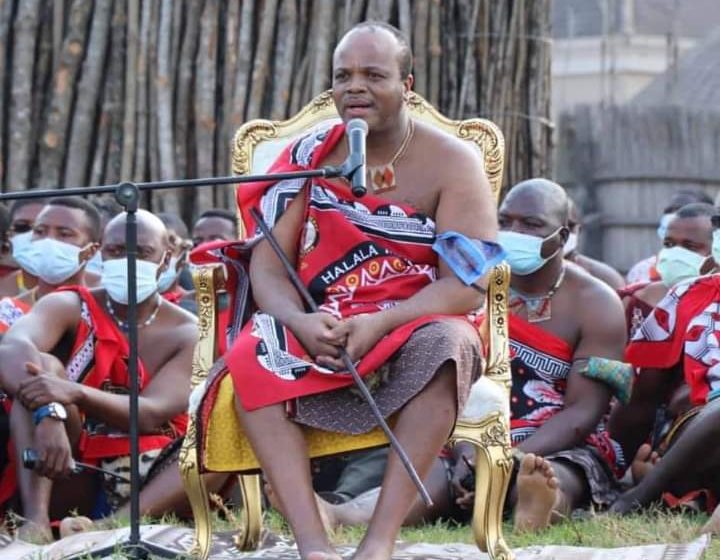
LOBAMBA — A strong stance against same-sex marriage has once again emerged at the highest level of leadership in Eswatini, following remarks by King Mswati III during a high-profile Easter gathering at Engabezweni Royal Residence.
But beyond the applause that followed his declaration, the event has raised deeper questions about the intersection of religion, governance, and human rights in the kingdom.
A Pre-Determined Debate?
The issue of same-sex marriage was not случайно introduced. It was one of three topics carefully selected by church leaders before being presented to the King—a long-standing tradition where clergy shape national moral discussions.
The question posed—whether same-sex unions should be allowed—was framed within a biblical context, with several pastors referencing the Book of Genesis to emphasise procreation as central to human existence.
When addressing the matter, the King firmly rejected the idea, stating that the country would not endorse practices he compared to the biblical account of Sodom and Gomorrah. The response from congregants was immediate and enthusiastic, signalling strong alignment between religious leadership and the monarchy on the issue.
Religion as Policy Influence
The gathering, attended by senior clergy from across the country, reflected more than a spiritual event—it served as a platform where religious doctrine appeared to directly inform national direction.
Sipho Simelane, one of the clergy who presented the topic, argued that same-sex unions contradict biblical teachings and threaten the foundational principle of procreation. Other pastors echoed similar sentiments, reinforcing a unified religious front.
However, critics argue that such discussions—when held in the presence of the King and framed as national guidance—blur the line between religious belief and state policy.
Silenced Counterpoints?
While the gathering allowed for theological debate, there was little indication of opposing views being presented, particularly those grounded in international human rights frameworks.
Globally, same-sex relationships are increasingly recognised as a matter of fundamental rights, with protections against discrimination and persecution forming part of international law. Yet, such perspectives appeared largely absent from the discussions.
This raises concerns about whether dissenting voices—especially those representing minority groups—are being excluded from influential national conversations.
A Broader Pattern
The Easter service also addressed other socially sensitive topics, including family planning and children’s rights, again largely framed through religious scripture.
Analysts note that these recurring debates highlight a broader pattern in Eswatini, where cultural traditions and Christian teachings remain deeply embedded in governance structures.
While supporters view this as preserving national identity and moral order, others warn it may limit the country’s ability to engage with evolving global norms on rights and inclusion.
What Comes Next?
Although the King’s remarks do not immediately translate into new legislation, they carry significant weight in shaping public discourse and policy direction in Eswatini.
As global conversations around equality and human rights continue to evolve, the country now faces a critical question: how to balance deeply held cultural and religious values with increasing international pressure to uphold universal rights.
For now, the message from Engabezweni is clear—but the debate, both inside and outside the kingdom, is far from over.